





EAB Thought Leadership
Same Destination, Different Courses: What the 2026 SHEEO Policy Conference Reveals About Higher Education’s Growing Disconnect
By George Pernsteiner, former president of SHEEO and member of CampusWorks Executive Advisory Board
Overview:
College and university leaders are navigating an environment shaped by demographic change, growing demands for accountability, rapid advances in AI, and increasing pressure to demonstrate the value of higher education. At the same time, many state policymakers are focused on workforce outcomes, return on investment, and data-driven decision-making. The result is a higher education ecosystem in which institutions and policymakers may be headed toward many of the same goals but increasingly charting different courses to reach them.
In this conference reflection, former State Higher Education Executive Officers Association (SHEEO) President George Pernsteiner shares observations from the 2026 SHEEO Higher Education Policy Conference, where state leaders, policymakers, and higher education stakeholders explored the future of postsecondary education. His report highlights several emerging trends that are likely to influence institutional strategy in the years ahead.
That observation may be one of the most important takeaways from this year’s conference. While both policymakers and institutions share a commitment to student success and economic opportunity, they are increasingly approaching those goals from different vantage points. Understanding where those conversations overlap, and where they diverge, will be essential for presidents seeking to position their institutions for long-term success.
“The first is the disconnect between what state policy staff are emphasizing (short-term credentials, data systems, ROI) and what I have heard from colleges and universities (enrollment cliff, institutional finances, athletics, federal loan limits, federal earnings test).”
Key Takeaways for Presidents
- Workforce outcomes are increasingly driving policy discussions. States are placing greater emphasis on employment outcomes, earnings, ROI, and short-term credentials as measures of institutional effectiveness.
- Data remains both a priority and a challenge. Despite years of investment, many states continue to struggle with integrating education, workforce, and economic data systems needed to support informed decision-making.
- The definition of student success is evolving. Policymakers are looking beyond retention and graduation rates to consider post-graduation earnings, economic mobility, and long-term student outcomes.
- Artificial intelligence is becoming part of the conversation. Discussions focused primarily on operational efficiencies, data analysis, and governance, with more limited attention to teaching and learning applications.
- A growing disconnect may be emerging between state priorities and institutional concerns. While policymakers focused on credentials, workforce alignment, and ROI, many colleges and universities remain deeply concerned about enrollment challenges, financial sustainability, federal policy changes, and demographic declines.
- New opportunities may emerge for institutions that can demonstrate impact. Colleges that effectively connect student outcomes, workforce needs, and data-informed decision-making may be better positioned to align with evolving state and federal expectations.
Perhaps the most significant message from this year’s conference is that higher education policy is entering a period of transition. There remains broad agreement that postsecondary education is essential for individuals, employers, and communities. However, there is increasing openness to new models, new partnerships, and new measures of success. For presidents and senior leaders, staying engaged in these conversations will be critical to shaping strategy, strengthening institutional relevance, and preparing for a rapidly evolving policy environment.
Below, George Pernsteiner offers a closer look at the discussions, themes, and policy signals that emerged from this year’s conference.
Higher Education Policy Conference — 2026
State Higher Education Executive Officers Association
Chicago, IL
The State Higher Education Executive Officers Association’s (SHEEO) 2026 Higher Education Policy Conference attracted a record attendance of more than 650 leaders from state agencies, university and college systems, foundations, nonprofit organizations, and private-sector partners.
Much of the agenda was devoted to short-term training and workforce issues, to civic learning, to calculating and chronicling return on investment, and (to a much lesser extent than in past years) to student success initiatives. As usual, however, there were several sessions on data and the use of student and workforce information. Interestingly, even after more than a decade of investment and attention, there was almost universal lamentation about the inadequacy of data systems.
The data issue is related to needing different information than that sought in the past. The progression from student access to student success, to graduate earnings, to student wealth, and ultimately to intergenerational mobility has required increasingly sophisticated data and deeper integrations among institutional, state, federal, and private-sector systems. Higher education leaders are asking different questions because the measures of their own success and relevance are shifting.
Affordability conversations focused very little on tuition and much more on the total cost of attendance (which at all the public universities who presented has been frozen or limited to less than the rate of general inflation for several years), the change driven largely by rising housing costs. It also was recognized that any calculation of the benefit of a degree had to take account of foregone earnings for students while attending college. Although not discussed at the conference, this obviously would be a much more complex effort when dealing with students who enroll as adults.
State policy leaders participating in the conference acknowledged that the projected decline in high school graduates over the next 15 years has permanently changed the higher education landscape and financial model. Despite that recognition, there was little discussion either of how to reduce costs, which had been a significant topic at SHEEO’s annual meeting the previous month, or increase enrollment by attracting a larger share of high school graduates or enrolling adults in an effort to keep their skills current in a rapidly changing AI work world. This is likely to be a real topic for institutions (public and private) but may represent a subject that will have to bubble up from them to the policymakers in states, whose current focus is on institutional performance in terms of student outcomes.
There was universal agreement that postsecondary education and training has been, is, and will be essential for society and for individuals. But it is not clear that our current colleges and universities are the only vehicles for providing that education and training or what partnerships are needed or data required to plot a course for and measure success. The initiative announced by several foundations seeking innovative ways to provide education and training after high school is indicative of this (as is the response from some intermediary associations to encourage their members to devise new approaches—approaches that may not be tied to traditional colleges and universities).
Integrating data from disparate systems that were intended to track various things for various purposes seems like a next step (although perhaps a temporary way stop on the journey to a newly defined set of roles and success measures). Artificial intelligence emerged as a recurring theme, particularly in discussions about data integration, operational efficiency, and institutional decision-making. While there was limited focus on AI’s role in advancing student success, attendees expressed cautious optimism about its potential applications in teaching and learning.
One takeaway I have from all this is that states are now wrestling with these issues in a disorganized way, but with an openness to non-traditional ideas. But the colleges and universities who are the current vehicles for most education beyond high school might not even consider a shift to more short-term credentialing (and the learning, employer acceptance, and ROI associated with it) for at least a few years. Institutions and their strategic partners would benefit from closely monitoring these policy discussions and preparing to support expanding definitions of success, including employment outcomes, program-level ROI, and integrated data strategies.
Data governance was highlighted in several sessions as was the integration of education and workforce information available to states from their own systems and from various federal and private systems and entities. There was concern about potential political motivations behind federal actions regarding the funding and guidance of a variety of data systems across multiple federal agencies (Education, Labor, Commerce, IRS, Census Bureau) and what that might mean for longitudinal datasets and comparisons over time periods. This points to concern about the availability and validity of some of the data needed for ROI calculations.
The earnings test that the federal government is putting in place was noted several times but not in any negative way, illustrating a difference between the policy staff and regulators who comprise SHEEO agencies and the institutions who educate students. But even those state leaders who are responsible for leading institutions did not raise concerns about the earnings test. Some of the states already have similar tests but do them over longer time periods than the four years after graduation that will be the federal measure. One concern from the states that already go beyond federal requirements is about harmonizing the data and the message.
Also absent from what attendees saw as pressing concerns were the changes to federal loan programs (grad and parent). This, too, differs from the concerns expressed by institutions—even though enrollment decline was cited as an issue by many at the conference (something especially private colleges fear the federal changes will accelerate).
Compared with SHEEO’s Annual Meeting in July, this conference featured less discussion of college closures and mergers and more emphasis on policy, workforce outcomes, and statewide data strategies.
The final discussion was a call, delivered by the former head of the Philadelphia Federal Reserve, for states to use corporations’ requests to provide data centers and other resources to tech companies as opportunities to require the companies to invest over a multi-year period in providing training for those losing jobs and for those who want to use the technology to enhance economic development and business in their states. The idea is to invest these funds in areas of states that might be negatively affected by declining enrollment at the local colleges.
I was struck by a few things at this meeting. The first is the disconnect between what state policy staff are emphasizing (short-term credentials, data systems, ROI) and what I have heard from colleges and universities (enrollment cliff, institutional finances, athletics, federal loan limits, federal earnings test). I have attended meetings of both groups for more than 20 years and have not observed such divergence in the past. It is not that the two are dealing with or pursuing matters that are antithetical. In fact, I suspect they would agree with one another on most matters that are important to each other.
Instead, it almost seems as if they are ships passing in the night on the same ocean and headed toward the same destination but pursuing different courses. For higher education leaders, the challenge will be ensuring that institutional priorities and policy priorities remain aligned. As states increasingly focus on workforce outcomes, ROI, and integrated data systems, colleges and universities will need to engage proactively in those conversations while continuing to address concerns around enrollment, student access, affordability, and institutional sustainability.
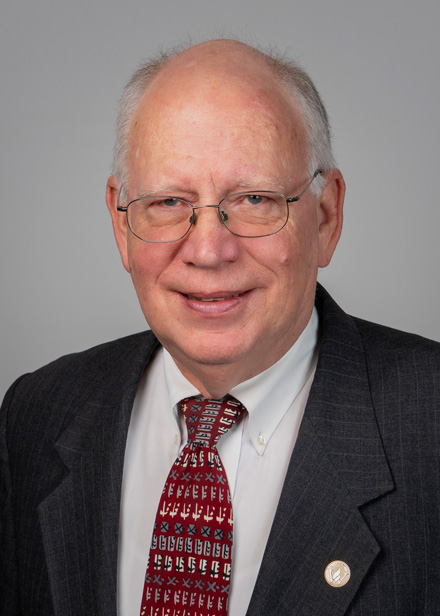
George Pernsteiner, former president of SHEEO and member of CampusWorks Executive Advisory Board

